Clogged Drain in Tatuapé? What to Prepare Before the Desentupidora Arrives
By the end of this read, you will know exactly what to have ready before a desentupidora Tatuapé team knocks on your door — and you will understand why that preparation often decides whether the job takes forty minutes or four hours. Most people call in a panic and then spend the first twenty minutes of the visit moving furniture, hunting for the building’s water shut-off valve, or arguing with a neighbor about access to the inspection box. A little planning removes all of that friction.
The search intent behind this topic is practical: you have a blocked drain, a backed-up toilet, or a slow-draining kitchen sink, and you want to know what happens next. This is written from the routine of someone who has handled these calls in the Tatuapé area of São Paulo many times, in apartments, ground-floor houses, and commercial kitchens along the main avenues. The order of operations below is the one that works.
Before the Technician Rings the Bell: The Five-Minute Checklist
The first thing I ask a caller is not “what is clogged?” but “who else needs to know we are coming?” In Tatuapé, a large share of the housing stock is vertical — condominiums with a concierge, a service elevator, and a rulebook. If you live in one of those buildings, letting the doorman know a service vehicle is arriving saves the technician a ten-minute negotiation at the gate. It also tells the building manager that a possible sewage issue is being handled, which matters if the blockage is in a shared stack rather than your own unit.
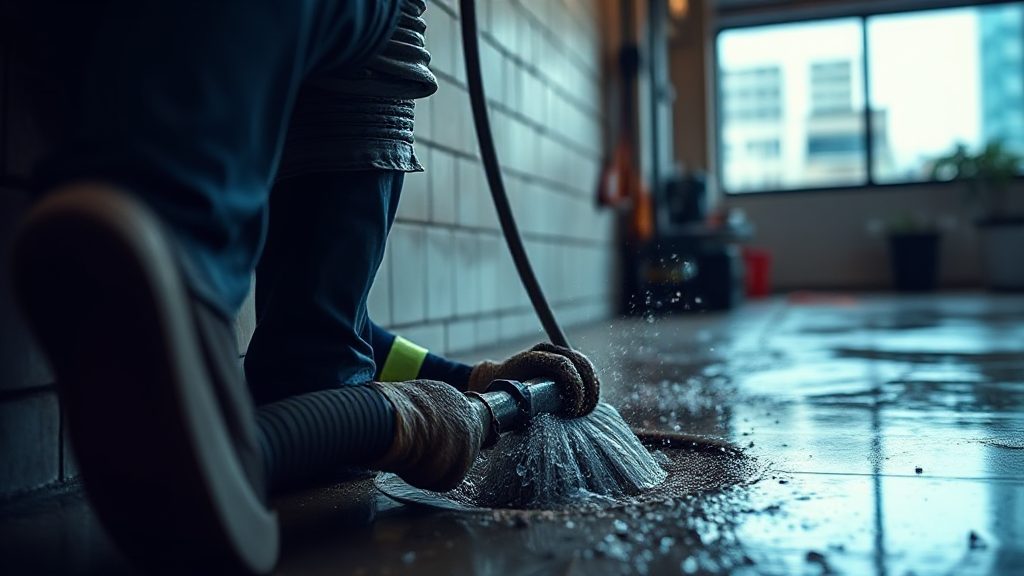
Next, clear the path. The technician will carry a cable machine, a hydrojetting hose, or both, and those need a straight line from the entrance to the drain. Move rugs, chairs, and anything fragile out of the corridor and bathroom. A clear two-meter working perimeter around the drain is the single biggest time-saver you can create. If the drain is behind a washing machine or under a built-in cabinet, start emptying that space before the team arrives, not while they wait.
Know where your shut-off valve and inspection box are
Every property has a water inlet valve, and most apartments have a sewage inspection box (caixa de inspeção) somewhere accessible — often near the service area, the kitchen wall, or the floor of the utility room. If you can point to it, the technician can decide in seconds whether the blockage is inside your unit or downstream in the building’s network. That single piece of information changes the whole diagnosis. If you do not know where it is, ask the concierge before the visit; they usually have the building’s hydraulic plan.
Write down what happened, in order
A short timeline helps more than you would expect. When did the drain start slowing? Did it back up after you used the washing machine, the shower, or the dishwasher? Did water appear in another drain at the same time? Did you already try a plunger, a chemical product, or a wire? Each answer narrows the cause. Chemical drain cleaners are the detail technicians most want to know about, because they can leave caustic residue that changes how the team handles the line and what protective gear they use.
What the Desentupidora Team Actually Needs From You
When the crew arrives, the visit follows a predictable sequence: visual inspection, identification of the affected line, choice of tool, execution, and a flow test at the end. Your job during that sequence is small but important — provide access, answer questions honestly, and stay out of the working area. Do not stand over the drain offering running commentary; the technician needs to hear the line and feel the cable’s resistance.
Access is the recurring bottleneck. In a house, that means opening the gate and unlocking the inspection box. In a commercial property, it means authorizing the person on site to sign off on the service. In a condominium, it means confirming with the building manager that the technician is allowed to work on a shared line. If the blockage is in a common pipe, the responsibility and the authorization usually sit with the condominium administration, not the individual resident — and a good desentupidora Tatuapé São Paulo SP team will tell you that upfront rather than billing you for a line that is not yours.
Parking, elevator, and building rules
Service vehicles need to stop somewhere. In the denser parts of Tatuapé, that can mean a loading zone, a garage entrance, or a side street. If your building requires the vehicle to use a service entrance, confirm that before the visit. The same applies to the service elevator: some buildings restrict its use during peak hours, and a hydrojetting unit needs a water source and a hose run that may cross common areas. A two-minute call with the concierge prevents a twenty-minute delay. desentupidora em Tatuapé São Paulo SP
Payment and authorization details
Have the decision-maker available by phone if they are not on site. Emergency services often need a quick approval for the scope of work, and a tenant cannot always authorize a repair on the owner’s behalf. Keep a payment method ready and ask for the service order with the description of what was done. This is not bureaucracy; it is the document that protects you if the same line blocks again within a short period.
Matching the Preparation to the Type of Blockage
Not every blockage is the same, and the preparation changes with the line involved. A slow kitchen sink is a different job from a backed-up toilet, which is different again from a flooded garage drain. Here is how the routine shifts.
Kitchen and bathroom drains
These are usually grease, soap, hair, and food residue. The preparation is simple: empty the cabinet under the sink, remove the drain cover if it is loose, and keep the area dry. If you have already poured a chemical product, say so. The technician will likely use a manual cable or a small electric snake, and the job is often finished in under an hour.
Toilets and sewage lines
A backed-up toilet that rises when you flush is a sewage line symptom, not a bowl symptom. Before the team arrives, stop flushing and do not run water in other fixtures — every liter you add becomes a liter on the floor. Put old towels or a shallow container near the base, and move anything absorbent away from the area. If water has already spilled, clean it up only after the source is stopped; mopping a live backup just spreads it.
Common areas and commercial kitchens
In a condominium or a restaurant, the blockage may affect a grease trap, a floor drain, or a shared stack. The preparation here is organizational: notify the affected units, clear the service corridor, and confirm who will be on site to authorize the work. Commercial kitchens should also note which equipment was running when the backup started, because a dishwasher or a prep sink can reveal which branch line is blocked.
Common Mistakes That Turn a Small Job Into a Big One
Most of the expensive outcomes I see are not caused by the blockage itself. They are caused by what happened before the call. The list below is short and worth reading twice.
- Pouring chemical cleaners repeatedly. A second and third bottle does not clear a solid blockage; it leaves a caustic pool that can damage older pipes and complicate the technician’s work.
- Forcing water through a blocked line. Running the tap or flushing again to “see if it clears” usually adds volume to an already full pipe.
- Opening an inspection box without knowing the layout. If you unscrew a lid and the box is under pressure, the mess is immediate. Let the technician open it.
- Calling a general handyman for a sewage line. A cable machine and a hydrojetting unit are specialized tools; a household snake rarely reaches the real obstruction.
- Not telling the team about previous interventions. If another company worked on the same line recently, say so — it changes the diagnosis and prevents repeated work.
There is also a timing mistake: waiting. A slow drain that has been slow for two weeks is already a partial blockage, and it will not improve on its own. Early calls are cheaper because the obstruction is still localized. Once sewage backs up into multiple fixtures, the job moves from a drain service to a line rehabilitation, and the cost and disruption rise accordingly.
After the Service: What to Confirm Before the Team Leaves
The visit is not over when the water drains. Before the technician packs up, ask for a flow test on every fixture connected to the affected line — sink, shower, toilet, and floor drain. Watch the water run for a full minute on each. A line that drains slowly under sustained flow is not clear, and it is far easier to address while the equipment is still on site.
Ask what caused the blockage and what would prevent a repeat. In many Tatuapé buildings, the answer involves grease accumulation in kitchen lines, root intrusion in older garden-level pipes, or insufficient slope in a renovated bathroom. None of those are fixed by unclogging alone, and a technician who explains the cause is giving you the information you need for preventive maintenance. If you are a building manager, this is the moment to ask whether a periodic hydrojetting schedule makes sense for the shared stacks.
Finally, keep the service record. Note the date, the line that was cleared, the method used, and the name of the company. If the same drain blocks again within a few months, that record turns a guessing game into a targeted inspection. For a residential owner, a commercial operator, or a condominium administration, that habit is what separates a one-time emergency from a managed system. The preparation you did before the visit is what made the visit short — and the record you keep afterward is what keeps the next one from happening.